- Short Squeez
- Posts
- 🍋 The Team for PE’s Biggest Problem
🍋 The Team for PE’s Biggest Problem
Plus: Wall Street bonus pool hits a record high, KKR set to make 15x on a data center investment, and Corebridge and Equitable’s financial megadeal.

Short Squeez
March 27, 2026

Together With

“We protect money because it's visible and throw away time because it's not.” — Shane Parrish
Good Morning! Wall Street's bonus pool hit a record $49.2B for 2025, with the average bonus up 6% to $247K. Corebridge Financial and Equitable Holdings agreed to merge valuing the combined company at $22B. And Fannie Mae will accept crypto-backed mortgages for the first time.
KKR is set to make 15x its $270M investment in a data center cooling business. Memory stocks including Micron, Sandisk, and Seagate sold off after Google unveiled TurboQuant. And Carlyle and KKR will build two data centers for the US Army at $2 billion each as military AI use has skyrocketed during the Iran war.
Plus: JPMorgan is planning a private credit fund that allows 7.5% redemptions, major outgoing CEOs are citing AI as a factor in their decisions to step down, and how mastering prioritization could change your life.
Smart investors read The Daily Upside. Join CFOs, fund managers, and leaders; subscribe for free today.
SQUEEZ OF THE DAY
The Team for PE’s Biggest Problem

Private equity has a traffic jam with roughly 12,900 unsold portfolio companies sitting on PE firms' books in the U.S. alone, according to PitchBook. The IPO market has been spotty, strategic buyers are cautious, and LP patience is wearing thin.
Firms that bought companies in 2018, 2019, and 2020 at peak valuations are staring at assets they can't exit cleanly, and the traditional three-to-five year bootstrap-and-flip playbook is looking less like a model and more like a memory.
Bank of America looked at that problem and saw a business opportunity. The firm is launching the Private Capital M&A Group, a dedicated team designed to help PE firms exit investments in "flexible, creative ways", which is banker-speak for: the old options aren't working, so let's find new ones.
The group is co-headed by Richard Peacock and Amanda Dupuy Ugarte and will pull resources across BofA's global capital solutions, financial sponsors, and industry coverage teams.
The pitch is coordination: instead of a PE firm getting siloed advice from one product group, the new team is supposed to rally the whole bank around finding the optimal exit, whether that's a continuation fund, a partial stake sale, a multi-asset vehicle, or something more creative.
"No one size fits all," as BofA's M&A co-head Eamon Brabazon put it, which is either profound or the most obvious thing ever said about private equity.
Brabazon notes that sponsor exits have been "structurally low" for years and by definition will need to rebound, meaning BofA is positioning now to capture the wave when it comes. Every major bank is fighting for a bigger slice of the PE advisory pie, and the firm that has the most creative exit toolkit when the logjam breaks stands to win a disproportionate share of the fees.
PE firms are also increasingly open to non-traditional structures such as continuation funds, NAV loans, and secondaries that require cross-product coordination rather than a single M&A mandate. BofA is essentially building the infrastructure to handle that complexity before its competitors do.
Takeaway: This is less about a new team and more about where PE is heading. The era of clean, predictable exits is over, at least for now. What's replacing it is a messy, multi-instrument world where getting out of a portfolio company might involve a secondary sale, a partial recap, a continuation vehicle, and a prayer. Banks that can navigate all of that at once will eat the ones that can't.
PRESENTED BY THE DAILY UPSIDE
Tired of financial newsletters that bury the lead?
That’s why more than 1 million investors start their day with The Daily Upside. Written by former Wall Street insiders, it cuts through the noise with actionable market insights that actually matter. They cover the latest in finance, economics and global business that go beyond the headlines. The best part? It’s completely free.
HEADLINES
Top Reads
Wall Street bonuses rose last year (Axios)
Corebridge Financial and Equitable Holdings to merge (WSJ)
Fannie Mae to accept crypto-backed mortgages for the first time (WSJ)
KKR scores one of its best bets with sale of data center cooling business (WSJ)
Micron, other chip stocks slump after Google unveils new memory technology (WSJ)
Carlyle and KKR to build $2bn data centres for US Army (FT)
JPMorgan plans private credit fund that allows 7.5% redemptions (BB)
Coca-Cola, Walmart outgoing CEOs cite AI in decisions to step down (CNBC)
Family offices make opportunistic bets on real estate as investors sit on sidelines (CNBC)
Blackstone commits $250 million to UAE payments firm despite Iran war risk (BB)
Shield AI, a startup making military drones, raises $2B (NYT)
Investors switch to cash from stocks and bonds like it's 2022 (BB)
Ares private credit fund posts steepest monthly loss on record (BB)
Blue Owl's Ostrover says no increase in defaults despite unease (BB)
Jamie Dimon says remote work breeds 'rope-a-dope politics' and stunts young workers' growth (Fortune)
Global forecasting group sees US inflation at 4.2% this year, much higher than Fed estimate (CNBC)
Pernod Ricard weighs deal for Jack Daniel's maker Brown-Forman (BB)
Venture capital: a crucial backer of fast-growing businesses (FT)
Private credit rating agency hits back at ‘incendiary allegation’ by SEC (FT)
CAPITAL PULSE
Markets Rundown

Market Update
Stocks sold off sharply as oil prices moved higher and ceasefire optimism faded
Technology led declines, with broader weakness across major indexes
Bond yields climbed, reflecting rising inflation concerns and fewer near-term rate cuts
Global markets followed the risk-off tone, with Europe lower and Asia mixed
Overall sentiment shifted back to geopolitics and energy driving markets
Energy Shock in Perspective
Today’s oil spike is meaningful, but structurally less damaging than past crises
The economy is far less energy-intensive, reducing the impact of higher prices
The U.S. is now a net energy exporter, providing a key buffer
Higher oil still pressures inflation and growth, but likely slows rather than breaks the economy
What’s Really Changing Beneath the Surface
Market leadership continues to broaden beyond mega-cap tech
Energy, industrials, and value-oriented sectors remain key beneficiaries
Growth stocks are lagging near term, but earnings outlook remains strong
The setup reinforces a more balanced market, rather than a single-theme rally
Movers & Shakers
(+) Avis Budget ($CAR) +13% after the rental car industry reported a surge in car rental searches because of the ongoing government shutdown and airport issues.
(–) Micron ($MU) -7% because Google revealed a new memory compression breakthrough called TurboQuant that could significantly reduce demand for high-bandwidth memory chips.
(–) Meta ($META) -8% after juries in two separate trials found the company liable for platform harm to children, threatening the Section 230 liability shield that has long protected social media giants.
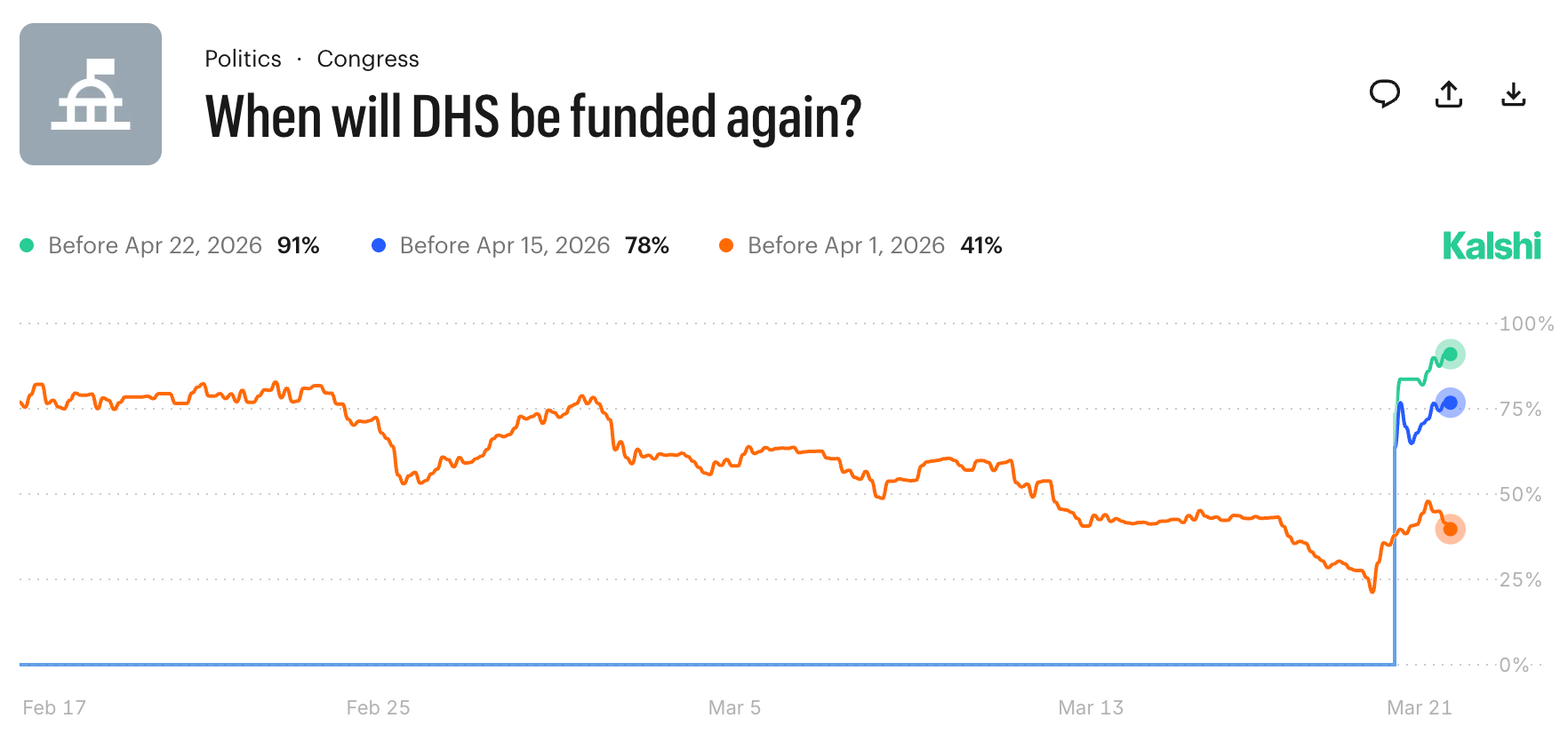
Prediction Markets
Private Dealmaking
Henkel will acquire Olaplex for $1.4 billion
Harvey, a legal AI startup, raised $200 million
Granola, an AI note-taking startup, raised $125 million
PDW, a drone manufacturer, raised $110 million
Isara, a software platform for solving complex problems, raised $94 million
Pinnacle Medicines, a developer of oral peptide therapies, raised $89 million
For more PE, VC & M&A deals, subscribe to our Buysiders newsletter.
BOOK OF THE DAY
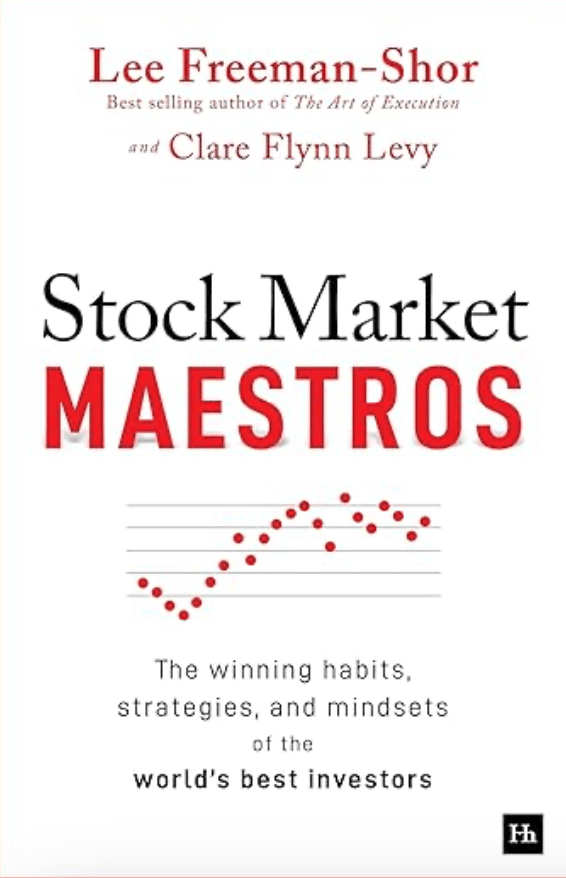
Stock Market Maestros
Description:
A sharp, execution-focused look at what actually separates elite investors from everyone else. Instead of obsessing over stock picking, this book analyzes real decisions made by top portfolio managers to uncover the habits, behaviors, and mental frameworks that drive long-term outperformance. The central idea is simple but powerful: success is not about always being right, but about how you manage outcomes when you are wrong. Through distinct investor archetypes and real-world examples, it builds a repeatable playbook for disciplined decision-making in uncertain markets.
Book Length: 288 pages
Release Date: March 3, 2026
Ideal For:
Investors, operators, and anyone making high-stakes decisions who want to improve execution, position sizing, and consistency rather than just picking winners.
Investment success is not about being right all the time, but about managing outcomes better than others when you are wrong.
DAILY VISUAL
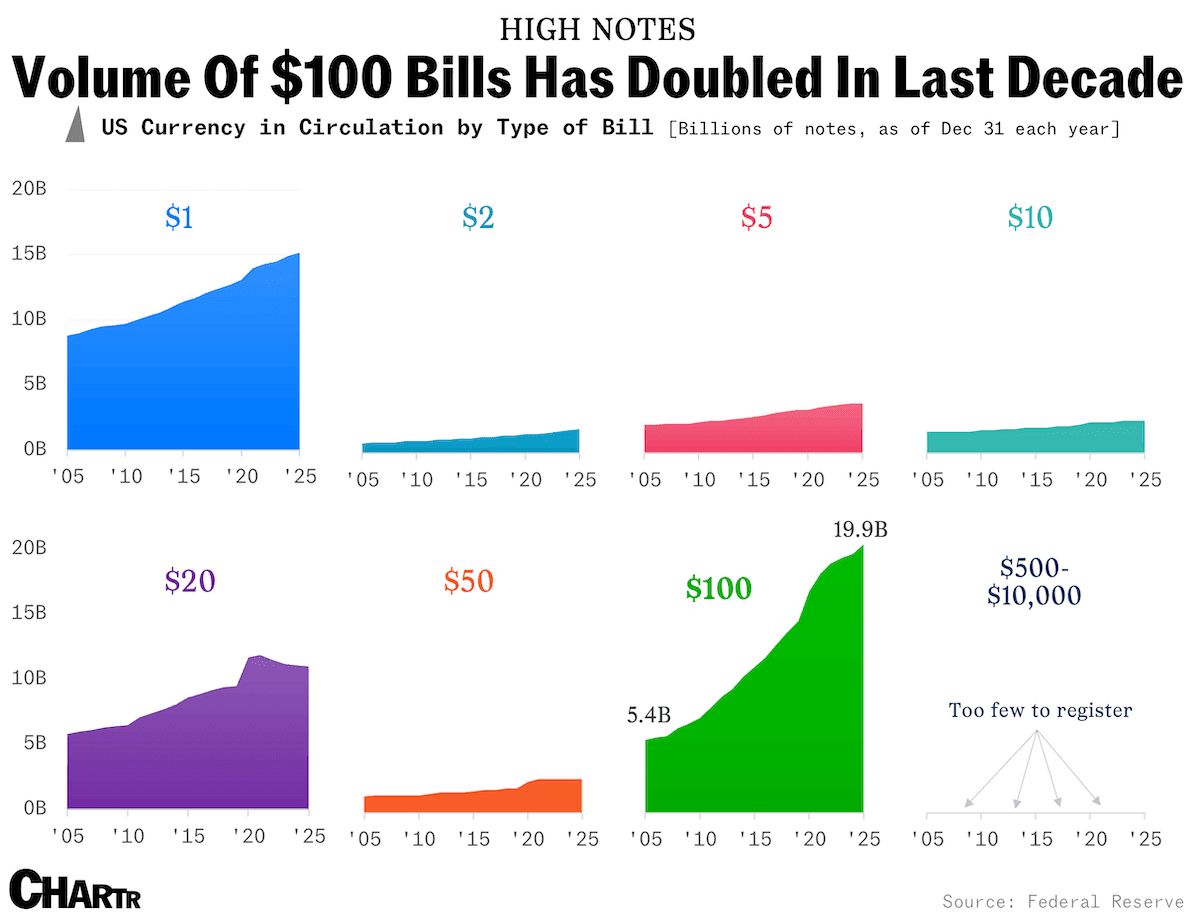
Big Bills
Source: Chartr
PRESENTED BY MOSAIC
How Reliable Are LLMs for Financial Modeling?
AI has transformed how Wall Street handles language-based work. Summarizing earnings calls, processing CIMs, drafting memos… for tasks like these, LLMs are definitely a game changer.
But financial modeling is a different problem entirely.
LLMs are probabilistic by nature. Run the same model twice and you get two different answers. For a summary of an expert call, that's fine. For an LBO supporting a multi-billion dollar investment decision, that's a structural problem.
A financial model needs to be 100% correct. A 99% accurate LBO is still a wrong LBO. And LLMs are nowhere near 99%...
AI adds more randomness to a system that needs less.
What firms actually need is purpose-built software where the math is locked in and never in doubt. Not AI making it up as it goes.
That's the approach Mosaic takes, fully automating the LBO process so the output is the same every single time. The questions on a deal should be about the business, not whether the math is working correctly.
DAILY ACUMEN
In The Short Run
Nobody rings a bell when a pullback becomes a crash. What feels like a temporary dip and what becomes a defining collapse look identical in the early stages, which is precisely why the early stages are so dangerous for people who think they can tell the difference.
The historical odds are uncomfortable to sit with. A ten percent drop becomes a fifteen percent drop more than half the time. A fifteen percent drop cascades into a bear market nearly three quarters of the time. These are not rare, catastrophic exceptions. They are the normal behavior of a system that has no obligation to stop where you need it to.
The only honest response to this is not a better prediction. It is a stronger stomach. The entire return premium that markets offer over time exists specifically because the short run is genuinely unmanageable, and most people will bail before they get to collect it. The chart never goes up in a straight line because if it did, the reward would not exist either.
ENLIGHTENMENT
Short Squeez Picks
MEME-A-PALOOZA
Memes of the Day

📣 Partner With Us: Get in front of an audience of over 1 million finance professionals, business leaders, and policy influencers. Submit a partnership inquiry.
📈 Grow With Us: Work directly with the Overheard on Wall Street team to scale your finance brand. Schedule your free consult.
🔒 Short Squeez Premium – Insiders: Access exclusive content, including investment analysis, wellness features, career tools, and our full recruiting resource library. Upgrade to Premium.
🧢 Wall Street Shop: Explore our collection of finance-themed apparel and merchandise. Visit the shop.
📬 Deals Newsletter – Buysiders: A curated roundup of major M&A, private equity, and VC activity. Plus access to private deal flow. Subscribe here.
What'd you think of today's edition? |
*Partner sponsored post.
Reply