- Short Squeez
- Posts
- The Information Wall Street Never Shared With You
The Information Wall Street Never Shared With You
A 360-degree view of life on Wall Street.

Short Squeez
March 27, 2026
The Information Wall Street Never Shared With You
I have been running Overheard on Wall Street for over eight years now. During that time, I've received thousands of stories. An analyst who had an epileptic seizure from sleep deprivation. A banker leading a client call from a hospital bed, apologizing for the heart rate monitor beeping in the background. An MD, upon learning an analyst was no longer able to walk, asking "Who is going to man the model?"
These are not one off stories, this is the reality of working on Wall Street.
Then in the summer of 2024, two Bank of America employees died within weeks of each other. And for a few months, working conditions became the hottest topic on Wall Street.
I spoke with and surveyed thousands of bankers, compiled a detailed report of my findings, and wrote an open letter to Wall Street firms calling for 14 structural changes the industry can make.
Some changes were made. Bank of America introduced a new timekeeping tool. And JPMorgan capped hours at 80. Then a couple of months later (as usual on Wall Street) everyone moved on.
During my research I had also collected self-reported mental and physical health scores. One number that stuck with me was that investment bankers scored 2.1 out of 5 for their mental health. Now this is not a number on a live deal or a few months of the year. It’s the population average at all times.
So I started thinking: what if instead of seeing this number once in a 2024 report, you could see it at all times? What if instead of a snapshot, we had a live record? And what if we had a live record for every single firm?
Because the difference between a snapshot and a record is accountability. A snapshot gives you a bad week of press. A record gives the market a reference point that never goes away. News cycles end. Data doesn't.
So instead of another report or open letter, I built Wall Street 360, where compensation and culture data lives in real time. As someone who spent years inside the industry, many of the features came directly from questions I used to ask myself in the bullpen and could never find answers to.
Here's what's inside:
Wall Street 360 is designed to bring transparency to both how much Wall Street pays and what working there actually feels like.
Here's the kind of analysis it makes possible. Hedge funds and equity research are similar jobs, but hedge funds pay more than 2x what equity research pays on average (see below). Despite that, equity research still ranks worse across every culture metric. Hedge funds report working weekends 17% of the time. For equity research, it's 50%.

I'm not going to tell you what to do with that information, but comp and culture side by side means that before joining a firm or an industry, you can see how it will actually affect your life, not just the number in your bank account (although that part is quite important too).
League Tables
Banks love creating league tables: deal volume, number of deals, basically any metric that makes them look good. So we created league tables for how they treat people: mental health, physical health, hours worked, hours slept, weekends worked.

The Burnout Score
In finance, everyone talks about being burned out, but what does that really mean? So we quantified it and turned it into a score. Our burnout score pulls together every culture metric, compares each to a healthy baseline, and produces a single score out of 100.

Oh and we built league tables for burnout too. Let's just say the firms you'd expect to see at the top of the burnout league tables are exactly where you'd expect to find them. Which is insane, because there's no opinion here, just data.
My 360
This is the feature I'm most proud of. Think Spotify Wrapped, but for your life on Wall Street. When I was a banking analyst, I always wondered what life was like at other banks. Now you can know.
Once you make a profile, you get benchmarked on every salary and culture metric against others in your exact same role. That kind of like-for-like comparison has never existed before.

Firm Pages
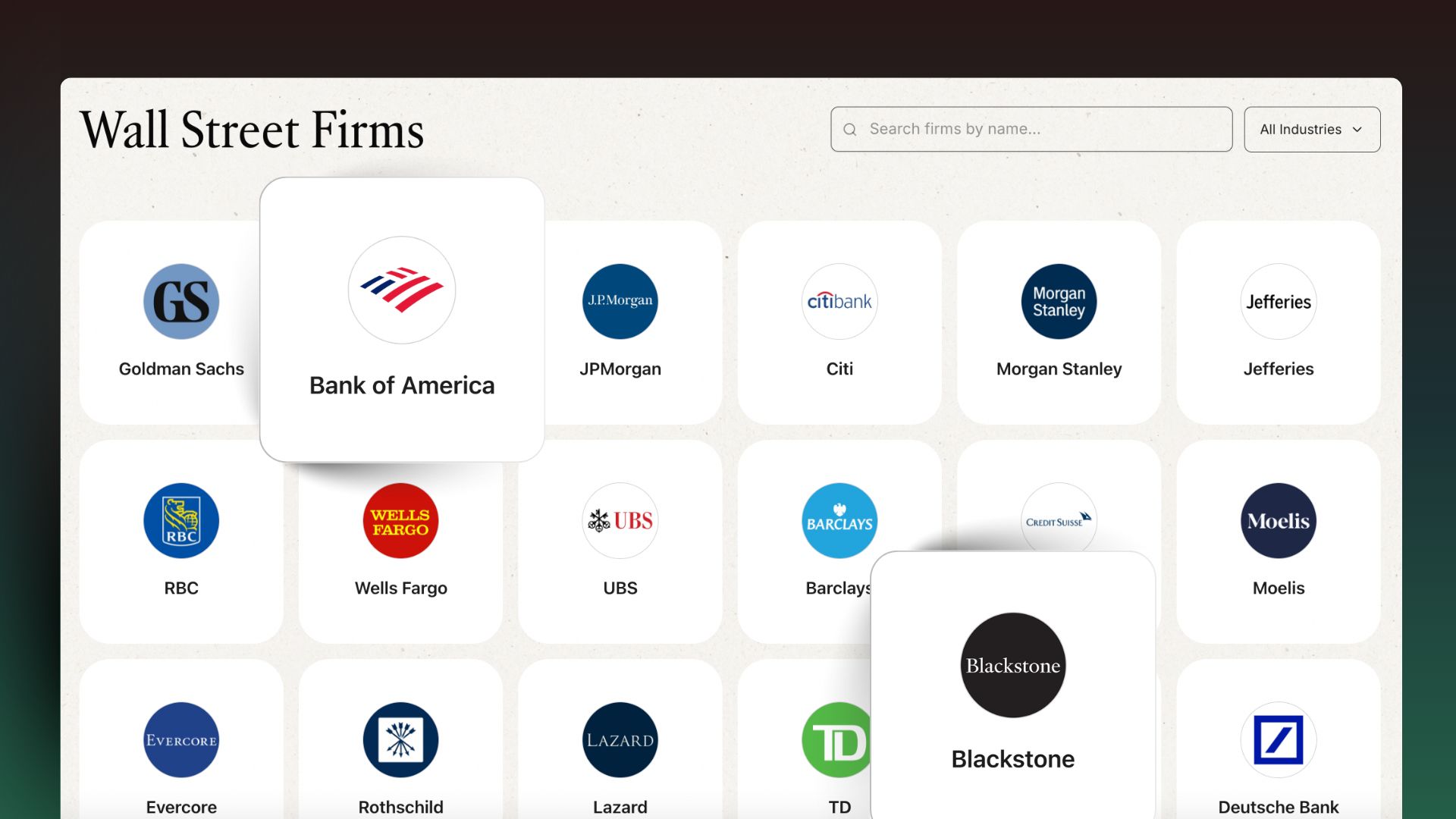
Wall Street 360 includes detailed records for more than 600 firms. Each firm page aggregates compensation and culture data submitted over the past several years. You can filter by industry, position and location to get the exact slice of the data you want to explore.
Comments
Over the past eight years, I've received thousands of comments from all of you, through surveys, Instagram DMs, and everything in between. Many of those stories now live inside Wall Street 360, sortable by firm, industry, position, and location.

Carried Interest
We also built the most detailed dataset on carried interest for private equity professionals. When I worked in private equity and negotiated my own carry, there was almost no market data available. Everyone was negotiating in the dark. Now there is a live dataset showing how carry actually looks across positions. Good luck negotiating.

Why This Matters
Firms have gotten away with bad culture because no public culture record has ever existed. Starting today, there is a live, growing record for every firm on Wall Street. With every new submission, the dataset gets stronger.
Firms with strong cultures will attract talent. Firms with weak cultures either improve or lose talent. For the first time, culture becomes a competitive variable.
The information is now in the market. That cannot be undone.
We put together a short film on the story behind Wall Street 360:
Built by Overheard on Wall Street, reaching 1.5M+ finance professionals globally.
Reply